
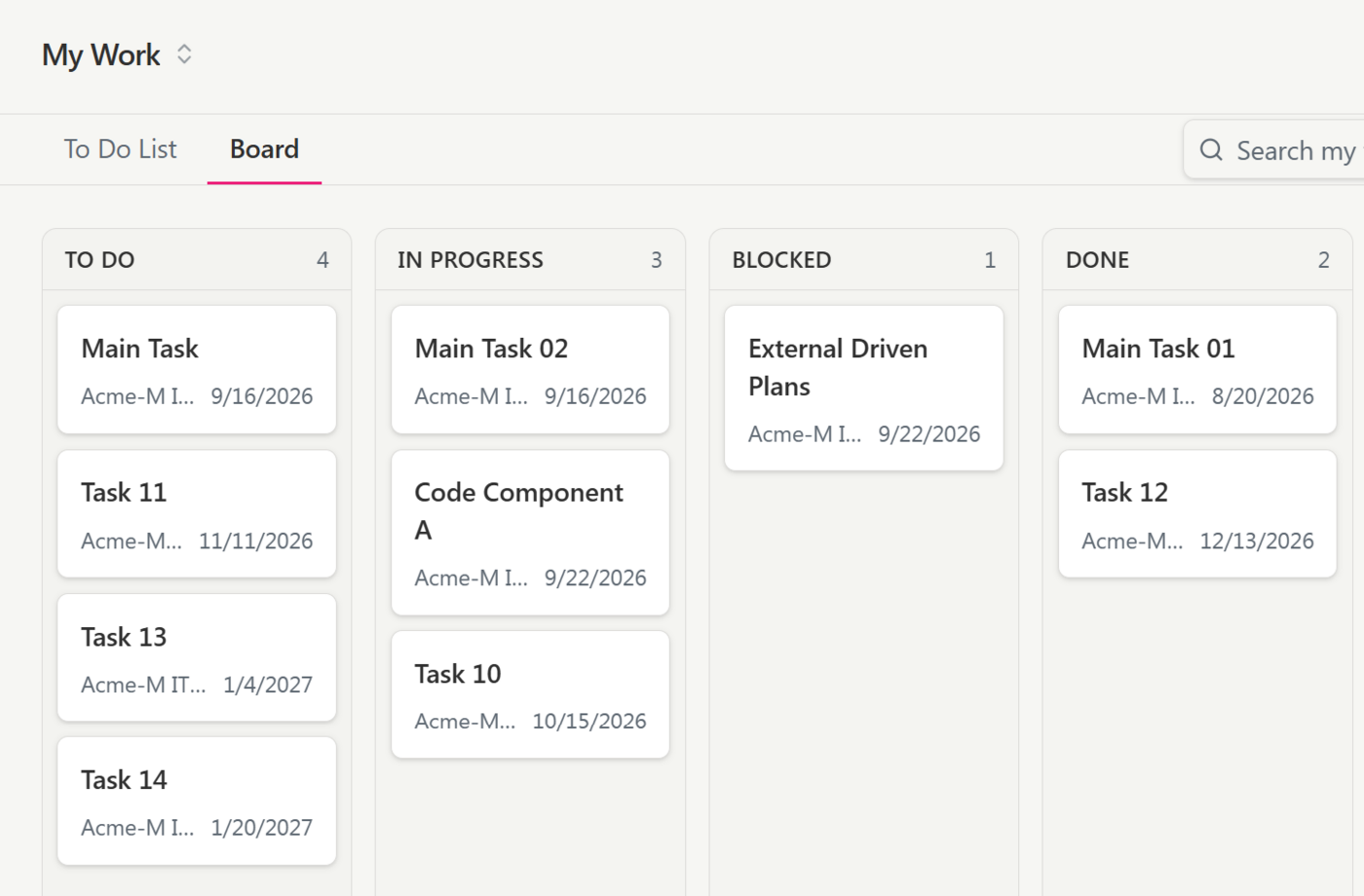
Program visibility is not a prettier dashboard. It is the ability to understand what is moving, what is blocked, what evidence supports the reported status, and which decisions leadership must make next.
Complex initiatives lose time when those facts live in separate plans, spreadsheets, meetings, and private conversations. A useful operating view brings them together early enough for leaders to act without creating another reporting burden for the team.
Start with the decisions leaders need to make
Many program views begin with everything the team can report. That creates volume, not clarity. Begin with the decisions sponsors and accountable leaders will face over the next 30 to 90 days, then work backward to the evidence, milestones, dependencies, and risks that inform those decisions.
This keeps reporting focused on action. A milestone matters because it changes readiness. A dependency matters because delay affects another commitment. A risk matters because someone must accept, reduce, transfer, or escalate it.
Separate status from evidence
A green status can mean on track, no known issue, no update received, or simply no one wants to escalate yet. Each meaning carries a different level of confidence. Program visibility improves when the team states what evidence supports the status and when that evidence was last tested.
- Define what complete means before work begins.
- Attach evidence to readiness claims and milestone acceptance.
- Mark assumptions that have not yet been validated.
- Show the age of critical updates and decisions.
Make dependencies visible in the same operating view
Dependencies are often documented once and then discussed only when they break. A better approach shows the supplying team, receiving team, expected date, acceptance criteria, and impact of delay in one place. This allows leaders to resolve competing priorities before a missed handoff becomes a program-level issue.
Create a decision and escalation rhythm
Visibility becomes useful when it changes behavior. Establish a short operating rhythm that reviews exceptions, validates evidence, assigns decisions, and confirms ownership. The objective is not to review every task. It is to focus leadership attention where delay, uncertainty, or misalignment can materially change the outcome.
- Review new blockers and aging decisions first.
- Confirm owners and due dates in the meeting, not afterward.
- Record the decision and its effect on scope, timing, cost, or risk.